
Building Downtown’s Future from the Ground Up
Anyone traveling through downtown South Bend has seen the unmistakable signs of change. Buildings are coming down, construction fencing is going up, and familiar blocks are being prepared for a new generation of apartments, research facilities, offices, businesses and public spaces.
Demolition can sometimes look like an ending. In downtown South Bend today, it represents the beginning of an ambitious new chapter.
The recently adopted Downtown South Bend 2045 Plan provides a long-range vision for a downtown that is more connected, active and welcoming. It builds on significant public and private investment already underway and recognizes that a thriving downtown requires more than individual buildings. It requires thoughtful planning for housing, transportation, public spaces, utilities and the infrastructure that will support the people and organizations occupying those spaces for decades to come.
At ChoiceLight, we are excited about what this transformation means for South Bend. We also know that some of the most important infrastructure supporting downtown’s future cannot be seen from the sidewalk.
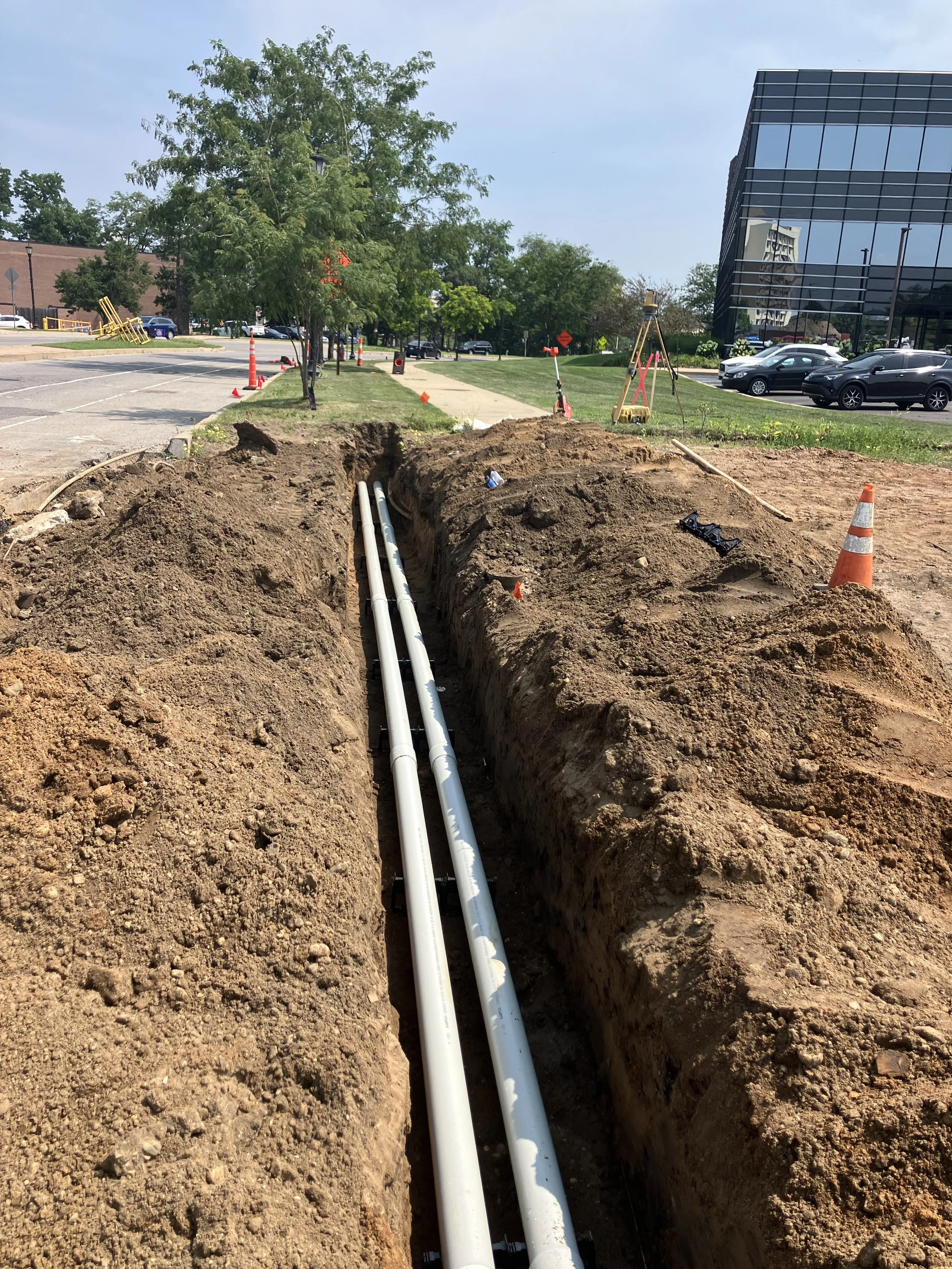
Beneath downtown’s streets, sidewalks and buildings is an extensive network of conduit and fiber-optic cable. ChoiceLight has spent nearly 20 years building and operating fiber infrastructure throughout the South Bend–Elkhart region. This network gives businesses, educational institutions, healthcare providers, nonprofits and public-sector organizations access to reliable, high-capacity connectivity and a choice of service providers.
Protecting that network during widespread demolition and construction is critically important.
Before a building is demolished or a street is excavated, ChoiceLight’s team works with property owners, developers, contractors, engineers and public agencies to identify existing fiber routes and avoid accidental damage. A single unplanned fiber cut can interrupt connectivity for organizations far beyond the immediate construction site.
That is why coordination must begin well before the equipment arrives.
Our role is not limited to protecting the infrastructure that is already underground. We must also anticipate where connectivity will be needed in the future. When a new apartment building, laboratory, office development or mixed-use project is still being designed, that is the ideal time to plan conduit routes, building entrances, handholes and connections to the broader fiber network.
Fiber infrastructure is much easier and more cost-effective to install while streets, sidewalks and construction sites are already open. Waiting until a building is complete can mean reopening pavement, navigating newly installed utilities or accepting connectivity options that are more expensive and less flexible.
The people who eventually live and work in these new developments will expect excellent connectivity from the day they arrive. Residents will rely on broadband for remote work, education, entertainment and telehealth. Researchers and technology companies may need to move enormous amounts of data. Offices, retailers and restaurants will depend on connectivity for everything from cloud applications and security systems to payment processing and customer service.
Those needs must be considered years before the first tenant moves in.
The current activity downtown is an exciting reminder that infrastructure planning is an essential part of economic development. Streets, water, sewer, power and transportation all help make development possible. Broadband infrastructure must be included in those conversations from the beginning as well.
ChoiceLight is proud to help protect the fiber network serving downtown today while working with our community partners to prepare for what comes next. The transformation may be visible in the buildings coming down and eventually going up, but downtown’s future will also depend on the connections being carefully planned beneath them.
As South Bend builds toward 2045, ChoiceLight will continue working to ensure that our community’s broadband infrastructure is ready to support the people, ideas and opportunities that will fill these new spaces.
